

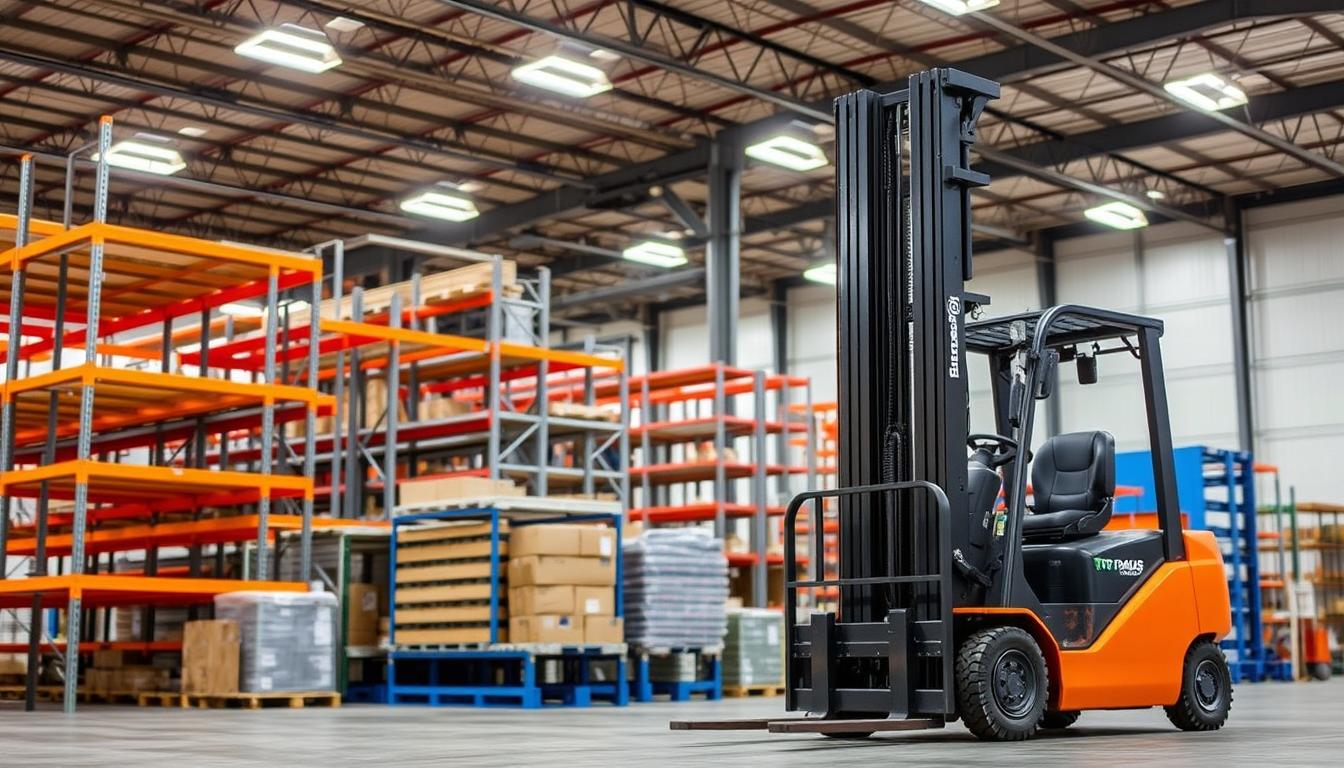
Efficient storage and organization are key for any business to succeed. Companies that improve their storage can work better and faster.
Investing in the right material handling equipment, like industrial shelving, changes how businesses run. It helps use space better and cuts down costs.
It’s important to find storage solutions that fit your industry. Whether it’s a warehouse, store, or factory, the right shelving makes a big difference.
Key Takeaways
- Efficient storage boosts work efficiency.
- Good shelving cuts down costs.
- Custom storage fits your industry needs.
- Material handling equipment boosts productivity.
- More storage space makes work flow better.
Understanding Industrial Shelving Solutions
Industrial shelving solutions are key to a well-organized warehouse or storage facility. They handle heavy loads and offer durable storage for businesses. This is crucial for efficient operations.
What Are Industrial Shelving Solutions?
Industrial shelving solutions are storage systems for warehouses, factories, and industrial settings. They store goods, materials, and equipment. Made from strong materials like steel, they can hold heavy weights.
These solutions are built to last and are flexible. Businesses can adjust them to fit their needs.
Key Features of Industrial Shelving Solutions:
- Durable construction to withstand heavy loads
- Adjustable shelving to accommodate different sizes of items
- Variety of materials and finishes to suit different environments
Importance of Shelving in Business Operations
Efficient shelving is vital for organized business operations. It helps manage inventory by storing and retrieving items systematically. It also reduces clutter, making workplaces safer and more productive.
Well-organized storage makes it easier to find items. This speeds up the picking and packing process in warehouses and distribution centers.
The benefits of effective industrial shelving include:
| Benefit | Description |
|---|---|
| Maximized Storage Space | Optimizes the use of available space, allowing for more efficient storage. |
| Improved Inventory Management | Facilitates easy location and retrieval of stored items. |
| Enhanced Workplace Safety | Reduces clutter and the risk of accidents caused by disorganization. |
Understanding industrial shelving solutions shows the value of investing in quality storage. Good industrial material handling and warehouse material handling depend on the shelving’s quality and design.
Different Types of Industrial Shelving
The world of industrial shelving is vast, with many options for different needs. It’s key for material handling solutions and material handling systems. It helps with storing and getting items efficiently.
Choosing the right shelving depends on your business needs. Think about what you store, the space you have, and how durable it needs to be.
Heavy-Duty Shelving
Heavy-duty shelving is for storing heavy items. It’s common in many industrial places. These shelves are made strong to hold a lot of weight.
The main benefits of heavy-duty shelving are:
- It can hold a lot of weight
- It’s built to last
- It offers many storage options
Adjustable Shelving Systems
Adjustable shelving systems are flexible. They let you change your storage setup as needed. This is great for places where storage needs change often.
Adjustable shelving systems have several advantages:
- They’re easy to change
- They fit different sizes of items
- They make storage more efficient
Mobile Shelving Units
Mobile shelving units save space. Shelves move along a track, so you don’t need many fixed shelves. They’re perfect for small areas.
The benefits of mobile shelving units are:
- They save space
- They’re easy to get to
- They’re flexible in setup
| Shelving Type | Weight Capacity | Adjustability | Space Efficiency |
|---|---|---|---|
| Heavy-Duty Shelving | High | Limited | Moderate |
| Adjustable Shelving Systems | Variable | High | High |
| Mobile Shelving Units | Variable | Moderate | High |
Knowing about different industrial shelving types helps businesses choose the best. This improves their material handling solutions and makes operations more efficient.
Benefits of Utilizing Industrial Shelving
Businesses can greatly improve their efficiency and productivity with industrial shelving. These solutions offer a lot of storage while keeping the area tidy and organized.
One big plus of industrial shelving is how it saves space. By using vertical storage, businesses can make more room on the floor. This is super helpful when space is tight and operations need to run smoothly.
Maximizing Space Efficiency
Industrial shelving units are very flexible. They can be set up in many ways to fit a company’s needs. This flexibility is key to using space well.
Using vertical space efficiently is a big part of industrial shelving. It lets businesses store more without needing more space. This saves money and avoids the need for big warehouse expansions.
| Benefits | Description |
|---|---|
| Increased Storage Capacity | Utilizing vertical space to store more inventory. |
| Improved Workflow | Freeing up floor space for more efficient operations. |
| Enhanced Organization | Better categorization and accessibility of stored items. |
Improving Organization and Accessibility
Industrial shelving is also great for keeping things organized and easy to find. It helps businesses keep their inventory in order and accessible.
Using material handling products like industrial shelving makes managing inventory easier. With everything in its place, employees can find what they need fast. This cuts down on wasted time and boosts productivity.
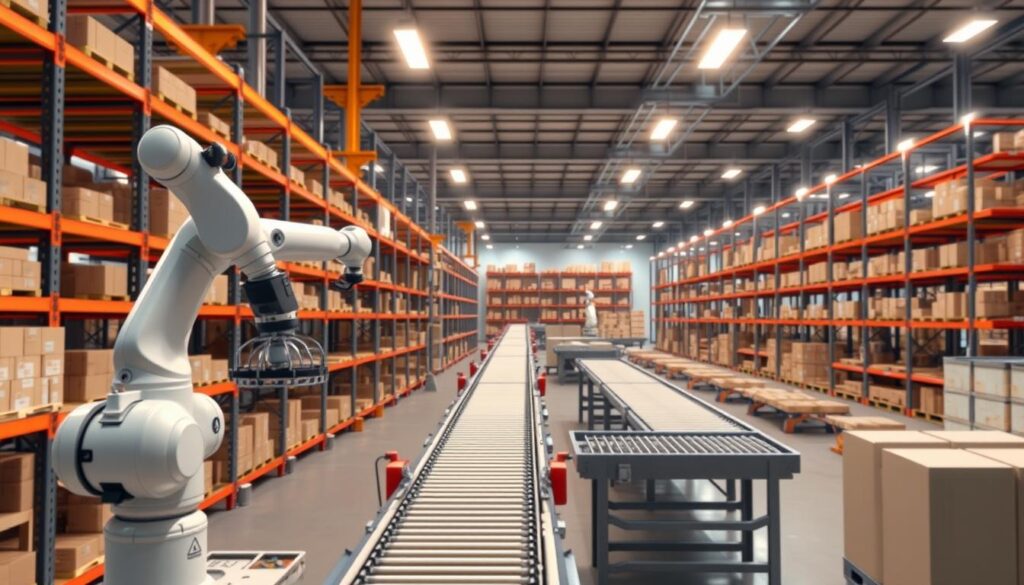
Also, industrial shelving makes the workplace safer. It keeps the floor clear and inventory secure. This lowers the chance of accidents and injuries.
How to Choose the Right Shelving
Choosing the right shelving is key for better storage and work flow. There are many options, so it’s important to think about a few things carefully.
Assessing Your Storage Needs
First, figure out what you need to store. Look at the size and type of items and how much space you have. Think about how much stuff you have and how often you need to get to it.
Key considerations include:
- The type and size of items to be stored
- The available space and layout of your facility
- The volume of inventory and access frequency
Knowing what you need helps pick the best shelving. For example, if you have big, heavy stuff, you’ll need heavy-duty shelving that can hold a lot of weight.
Considering Weight Capacity
The weight your shelving can handle is very important. You need to know how much weight it will need to support. Add up the weight of all your items and choose shelving that can handle it.
| Shelving Type | Weight Capacity | Typical Use |
|---|---|---|
| Light-Duty Shelving | Up to 500 lbs | Office supplies, light inventory |
| Medium-Duty Shelving | 500-1,500 lbs | General storage, moderate inventory |
| Heavy-Duty Shelving | 1,500-3,000 lbs | Heavy equipment, large inventory |
By looking at your storage needs and the weight your shelving can hold, you can find the perfect industrial shelving solution. This will improve your material handling and make your work flow better.
Customization Options for Industrial Shelving
In the world of industrial storage, customization is key to boosting productivity. Industrial shelving can be made to fit the needs of various industries. This ensures storage solutions are both efficient and effective.
Tailored Designs for Specific Industries
Different industries need different storage solutions. For example, material handling companies need shelving that can handle heavy loads and last a long time. Retail businesses, on the other hand, might want shelving that looks good and works well.
Warehouses need shelving that makes warehouse material handling easier. It should be easy to reach and hold a lot of stuff. Custom shelving can help make operations smoother, cut down on mess, and boost efficiency.
Selecting the Right Materials
Choosing the right material for shelving is important. It affects how long it lasts, how easy it is to keep clean, and its cost. Steel is strong and lasts a long time, while wire is good for seeing things and letting air flow.
| Material | Durability | Maintenance | Cost |
|---|---|---|---|
| Steel | High | Low | Moderate |
| Wire | Medium | Low | Low |
| Wood | Medium | Moderate | High |
When picking materials, think about how much weight it needs to hold, where it will be used, and any special rules or looks you need.
By picking the right materials and design, companies can make shelving that meets their needs now and in the future.
Installation Considerations
The success of industrial shelving depends on proper installation. Whether you’re starting a new warehouse or rearranging an old one, how you install shelving matters. It affects both performance and safety.
DIY Installation vs. Professional Help
Choosing between DIY and professional installation is a big decision. DIY installation saves money and lets you work at your own pace. But, you need to know how to assemble it safely.
Professional installation offers expertise and safety. It’s great for complex systems or big projects.
| Aspect | DIY Installation | Professional Installation |
|---|---|---|
| Cost | Generally lower upfront costs | Higher initial cost due to labor charges |
| Safety | Requires personal knowledge of safety protocols | Professionals are trained in safety procedures |
| Time | Flexible scheduling but can be time-consuming | Typically faster due to professional efficiency |
Essential Tools for Assembly
Having the right tools is key, whether you DIY or hire pros. Some essential tools for assembling shelving include:
- Allen wrench
- Screwdrivers (both flathead and Phillips)
- Drill and bits
- Level
- Measuring tape
Maintenance Tips for Industrial Shelving
To keep your material handling solutions safe and long-lasting, regular maintenance is essential. Industrial shelving is crucial for many businesses, offering vital storage for goods and materials. Without proper care, these units can wear out, posing safety risks and reducing efficiency.
Regular Inspections and Safety Checks
Regular inspections are key to spotting issues early. Look for signs of wear like rust, dents, or bent frames. Make sure all shelves are level and well-attached to the frame. It’s also important to check that the shelving isn’t overloaded, as this can cause it to fail.
Inspection Checklist:
- Check for damage or corrosion
- Verify that shelves are securely attached
- Ensure weight capacity is not exceeded
- Look for signs of overloading
Cleaning and Care Procedures
Cleaning your industrial shelving regularly boosts its look and keeps it sturdy. Use a mild detergent and water to clean. Stay away from harsh chemicals that could harm the material.
Tips for Effective Cleaning:
- Use mild detergent and water
- Avoid harsh chemicals
- Dry thoroughly to prevent rust
| Maintenance Task | Frequency | Importance Level |
|---|---|---|
| Inspect for damage or corrosion | Monthly | High |
| Clean shelves and frames | Quarterly | Medium |
| Check weight capacity | Before loading | High |
By sticking to these maintenance tips, your industrial shelving will stay safe, efficient, and durable. Regular care not only extends the life of your shelving but also makes your workplace safer.
Costs of Industrial Shelving Solutions
The cost of industrial shelving is more than just the price you pay upfront. It also includes ongoing maintenance, durability, and efficiency. Businesses need to think about these when looking at the costs of material handling systems and products.
Budgeting for Your Shelving Needs
To budget for industrial shelving, first figure out your storage needs. You need to calculate the space needed, the types of items to store, and how much shelving you’ll need.
Key considerations for budgeting include:
- Initial investment costs
- Long-term maintenance and repair costs
- Potential costs associated with customization or upgrades
Factors Influencing Shelf Prices
Several things can affect the cost of industrial shelving. Knowing these can help businesses choose the right material handling products.
| Factor | Description | Impact on Price |
|---|---|---|
| Material Quality | The durability and quality of materials used in shelving construction. | Higher quality materials increase the price. |
| Size and Capacity | The size of the shelving units and their weight capacity. | Larger and heavier-duty shelving units are more expensive. |
| Customization Options | Tailored designs and features to meet specific business needs. | Customization can significantly increase costs. |
By understanding these factors and considering their budgeting needs, businesses can make informed decisions when investing in industrial shelving solutions.
Enhancing Safety with Industrial Shelving
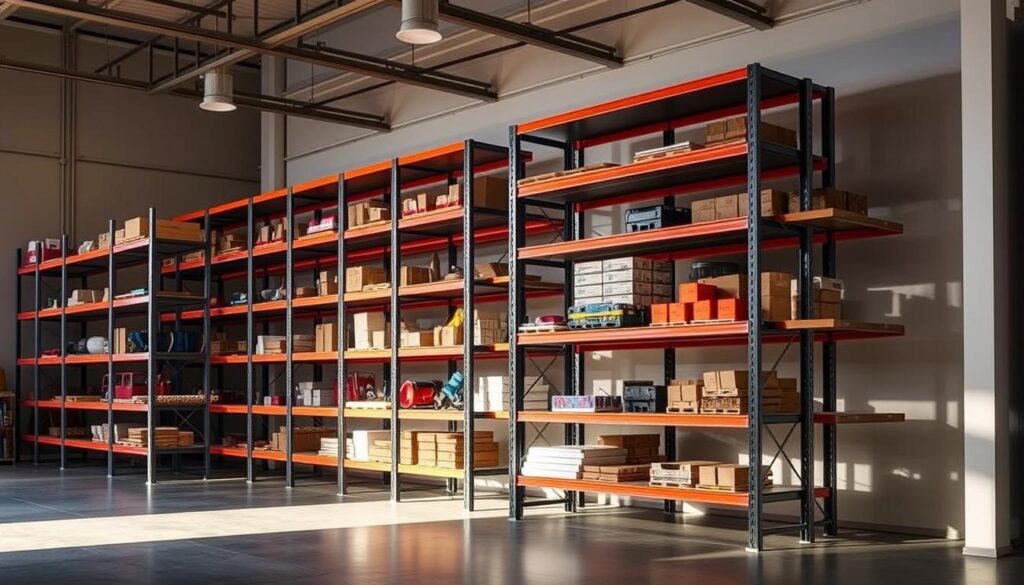
The safety of industrial shelving is very important. It’s crucial to use and maintain these systems correctly. This helps prevent accidents and keeps the workplace safe.
Load Limits and Safety Standards
Following load limits and safety standards is key to safety. Each shelving unit has a maximum weight it can hold. Going over this can cause serious damage. It’s important to know and follow these rules to avoid overloading.
Checking the weight capacity of your shelving regularly is vital. This includes checking it when you first install it and then often after. Using material handling technology that fits with your shelving helps keep things safe.
Signs of Wear and Tear
Spotting wear and tear on shelving is also crucial. Shelving can wear out due to heavy use, the environment, or lack of care. It’s important to check for damage or wear, like bent frames or rust.
- Look for any damage or wear on the shelving.
- Make sure all bolts and screws are tight.
- Check that the shelving is level and stable.
Experts say, “Regular maintenance is key to keeping your shelving safe and lasting longer.” By taking care of your shelving, you can lower the risk of accidents.
In summary, safety with industrial shelving comes from following load limits, safety standards, and checking for wear. By focusing on these, businesses can make their workplaces safer. This protects employees and assets.
Case Studies: Successful Shelving Solutions
We’ll look at how industrial shelving solutions have helped different industries. We’ll see how they improve warehouse efficiency and change retail businesses for the better.
Warehouse Optimization Stories
Many material handling companies have improved a lot by using good shelving. For example, a big distribution center increased its storage by 30% with a new shelving system.
This new system made it easier to find and get products. It cut down labor costs by 25% for warehouse material handling.
Retail Business Transformations
Retail businesses have also seen big benefits from shelving solutions. A top retail chain improved its store look by using adjustable shelves. This let them show products in more creative ways.
- Increased customer satisfaction due to better product organization
- Improved inventory management
- Enhanced store aesthetics
This change led to more sales for the retail chain. It shows how good shelving can make a business do better.
Looking at these examples, it’s clear that shelving solutions can really help a business. They improve how things work and make customers happier.
Future Trends in Industrial Shelving
The world of industrial shelving is about to change a lot. New tech in material handling and automation is leading the way. As things change, we need shelving that’s better, lasts longer, and is smarter.
Advancements in Durability
New tech in materials is making shelving stronger and longer-lasting. Better materials and ways to make them are making shelving more durable. This means less upkeep and shelving that lasts longer.
Smart Storage Solutions
Smart shelving and automation are changing how we store things. With automation, businesses can keep track of stock and storage conditions in real-time. This makes things more efficient and saves money.
As tech keeps getting better, we’ll see even smarter shelving. This will make work easier and more productive.