

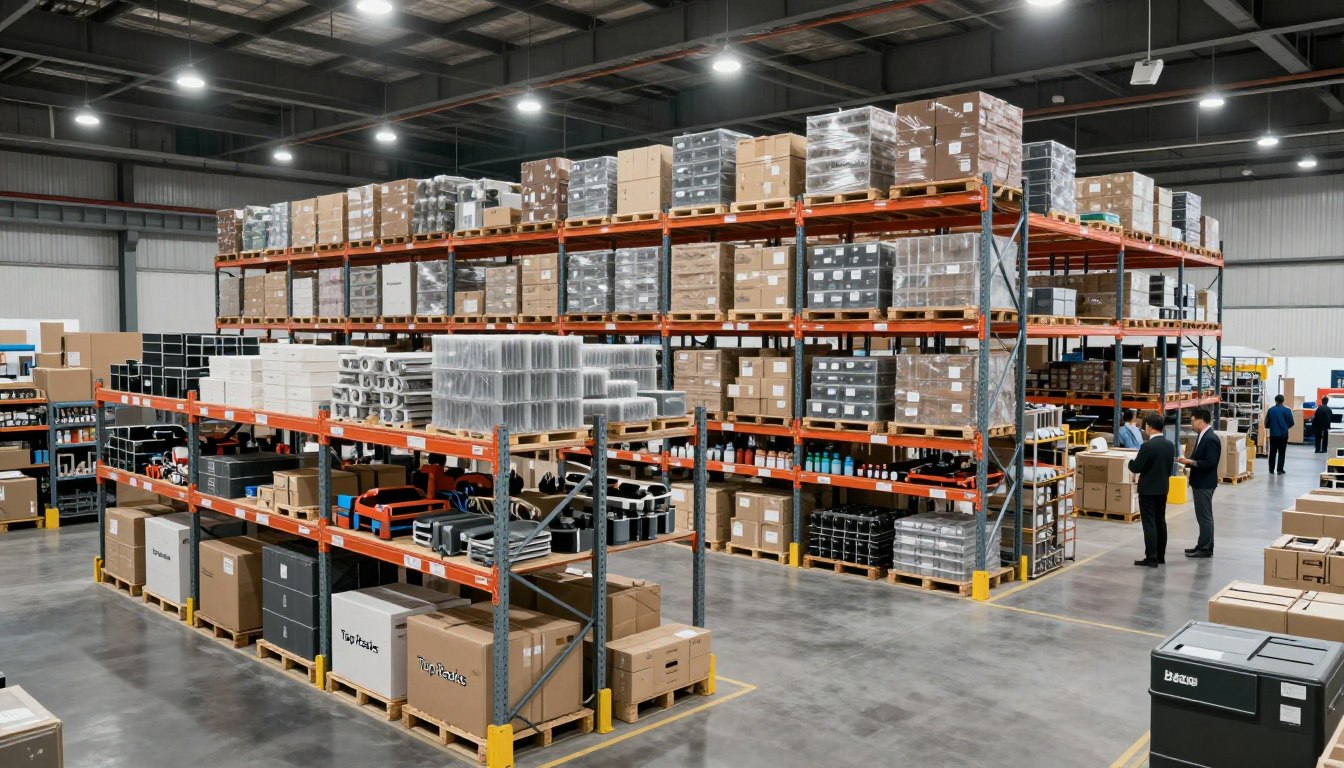
Efficient industrial storage systems are crucial for businesses to stay competitive in today’s fast-paced market.
With the rise of e-commerce, warehouses are facing increasing pressure to optimize their space and streamline operations.
Maximizing space and efficiency is no easy feat, but with the right warehouse storage solutions, businesses can overcome common challenges and improve their bottom line.
Key Takeaways
- Efficient industrial storage systems are crucial for businesses.
- Maximizing space and efficiency is key to staying competitive.
- The right warehouse storage solutions can improve a business’s bottom line.
- Optimizing warehouse operations can help businesses overcome common challenges.
- Streamlining operations is essential for success in today’s fast-paced market.
Understanding Warehouse Storage Solutions
In the world of logistics, warehouse storage solutions play a pivotal role in ensuring that goods are stored safely and retrieved efficiently. As warehouses continue to be the backbone of supply chain operations, the importance of effective storage solutions cannot be overstated.
What Are Warehouse Storage Solutions?
Warehouse storage solutions refer to the systems and methods used to store products within a warehouse. These solutions are designed to maximize space, improve inventory management, and enhance overall operational efficiency. Efficient storage solutions are critical for reducing costs and improving productivity.
As noted by a logistics expert, “The right storage solution can transform a warehouse’s operational efficiency.” This underscores the significance of selecting appropriate storage systems that align with the specific needs of a warehouse.
Importance of Efficient Storage
Efficient storage is vital for several reasons. Firstly, it allows for better space utilization, enabling warehouses to store more products within the same footprint. Secondly, it improves inventory management by making it easier to locate and retrieve products. Lastly, efficient storage solutions contribute to a safer working environment by reducing clutter and minimizing the risk of accidents.
- Maximizes storage capacity
- Enhances inventory management
- Improves safety
Key Components of Storage Solutions
The key components of warehouse storage solutions include shelving systems, racking systems, and inventory management software. Warehouse shelving solutions provide a structured way to store items, while racking systems allow for the storage of heavier items such as pallets. Inventory management software, on the other hand, helps track inventory levels and locations.
“A well-designed storage solution is one that balances cost, efficiency, and safety.” – Warehouse Management Expert
By understanding the components and importance of warehouse storage solutions, businesses can make informed decisions to improve their logistics operations.
Types of Warehouse Storage Systems
In the world of logistics, the type of warehouse storage system used can make a substantial difference in terms of productivity and cost-effectiveness. Warehouse storage systems are designed to cater to various storage needs, and selecting the right one is crucial for efficient operations.
Conventional Racking Systems
Conventional racking systems are among the most commonly used storage solutions in warehouses. They are versatile, cost-effective, and can be customized to fit different types of inventory.
Key Features:
- High storage capacity
- Easy accessibility to stored items
- Customizable to different inventory sizes
Automated Storage and Retrieval Systems
Automated Storage and Retrieval Systems (AS/RS) represent a cutting-edge solution for warehouse storage. These systems use automated machinery to store and retrieve items, significantly reducing labor costs and increasing efficiency.
Benefits of AS/RS include:
- Reduced labor costs
- Increased storage density
- Improved inventory accuracy
Mobile Storage Solutions
Mobile storage solutions offer a flexible and space-saving alternative to traditional static shelving. These systems are particularly useful in warehouses where floor space is limited.
Advantages:
- Maximizes floor space
- Enhances storage capacity
- Flexible configuration options
To illustrate the differences between these storage systems, consider the following comparison table:
| Storage System | Storage Capacity | Accessibility | Cost |
|---|---|---|---|
| Conventional Racking | High | Easy | Moderate |
| Automated Storage and Retrieval | Very High | Automated | High |
| Mobile Storage | High | Easy | Moderate to High |
Choosing the right warehouse storage system depends on various factors, including the type of inventory, available space, and budget. By understanding the different types of storage systems available, businesses can make informed decisions to optimize their warehouse operations.
Benefits of Effective Warehouse Storage
The right warehouse storage solutions can transform your warehouse operations, making them more efficient and cost-effective. By optimizing your storage capacity, you can significantly improve your overall operational efficiency.
Improved Space Utilization
Efficient warehouse storage solutions enable businesses to maximize their storage capacity. By utilizing vertical space and pallet racks, companies can store more inventory in a smaller footprint.
- Maximizing vertical storage capacity
- Optimizing aisle space
- Reducing clutter and improving accessibility
Enhanced Inventory Management
Effective warehouse storage solutions also enhance inventory management by making it easier to track and manage inventory. This leads to reduced stockouts, overstocking, and improved order fulfillment rates.
“Effective inventory management is crucial for maintaining a competitive edge in today’s fast-paced business environment.”
With efficient storage systems, businesses can implement a first-in, first-out (FIFO) inventory system, reducing the risk of inventory obsolescence.
Increased Operational Efficiency
Increased operational efficiency is another significant benefit of effective warehouse storage. By streamlining storage and retrieval processes, businesses can reduce labor costs and improve productivity.
Automation and mechanization of storage systems can further enhance operational efficiency, allowing businesses to handle larger volumes of inventory with ease.
Choosing the Right Storage Solution
The right storage solution is crucial for maximizing warehouse space and streamlining inventory management. With the variety of storage options available, making an informed decision can be challenging.
Assessing Your Space Requirements
Before selecting a storage solution, it’s essential to assess your warehouse’s space requirements. This involves measuring the available space, considering the height of your warehouse, and evaluating the layout.
Key factors to consider:
- Warehouse dimensions
- Ceiling height
- Existing infrastructure (e.g., shelving, racking)
- Accessibility and workflow
Evaluating Your Inventory Type
The type of inventory you store plays a significant role in determining the most suitable storage solution. Different products have unique storage requirements.
For instance:
- Perishable goods may require climate-controlled storage.
- Heavy or bulky items need robust shelving or racking systems.
- Small or fragile items may necessitate secure, compartmentalized storage.
Budget Considerations
Budget is a critical factor when choosing a storage solution. It’s not just about the initial investment; ongoing costs, such as maintenance and potential upgrades, should also be considered.
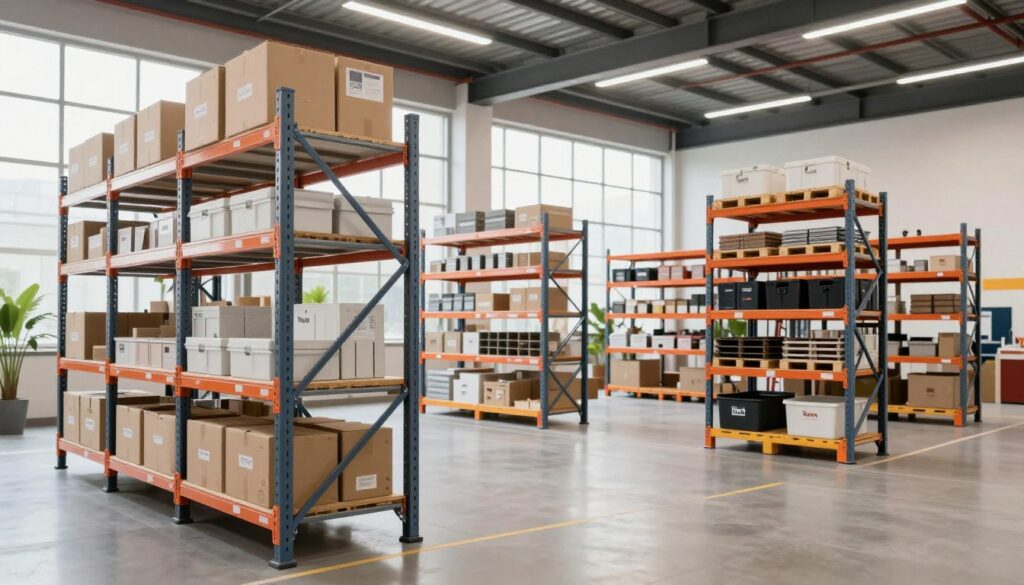
A detailed comparison of different storage solutions can help in making an informed decision. The following table outlines key aspects to consider:
| Storage Solution | Initial Cost | Maintenance Cost | Scalability |
|---|---|---|---|
| Conventional Racking | Moderate | Low | High |
| Automated Storage | High | Moderate | Very High |
| Mobile Storage | Moderate | Low | Moderate |
By carefully assessing your space requirements, evaluating your inventory type, and considering your budget, you can choose an innovative warehouse storage solution that enhances your operational efficiency and supports your business goals.
Innovative Technologies in Warehouse Storage
The integration of cutting-edge technologies is redefining the future of warehouse storage solutions. These advancements are not only improving operational efficiency but also enhancing the overall management of warehouse storage systems.
Warehouse Management Systems (WMS) are a crucial component of modern warehouse storage. A WMS is a software application that helps manage and optimize the day-to-day operations of a warehouse. It provides real-time data on inventory levels, tracks the movement of goods, and optimizes storage and retrieval processes.
RFID Technology
RFID (Radio Frequency Identification) technology is another innovative solution transforming warehouse storage. It enables the tracking of inventory in real-time, reducing the need for manual counting and minimizing errors. RFID tags can be attached to pallets, cases, or individual items, allowing for precise inventory management.
Warehouse Management Systems (WMS)
A robust WMS is essential for effective warehouse storage. It streamlines operations, improves inventory accuracy, and enhances the overall efficiency of the warehouse. By automating tasks such as inventory tracking and order fulfillment, a WMS allows warehouse staff to focus on more critical tasks.
Robotics and Automation
Robotics and automation are revolutionizing warehouse storage by increasing efficiency and reducing labor costs. Automated storage and retrieval systems (AS/RS) can store and retrieve items quickly and accurately, minimizing the need for human intervention. Robotics also enhances safety by taking over tasks that are hazardous or physically demanding for humans.
The adoption of these innovative technologies is transforming the landscape of industrial storage systems and warehouse organization solutions. By leveraging RFID technology, WMS, and robotics, warehouses can achieve higher levels of efficiency, accuracy, and productivity.
Safety and Compliance in Warehouse Storage
Warehouse storage safety and compliance are not just about following rules; they’re about creating a secure work environment. Effective safety measures and compliance with regulations are crucial for protecting employees, reducing operational risks, and ensuring the smooth functioning of warehouse operations.
Regulatory Requirements
Warehouse operations must comply with various regulatory requirements, including those related to occupational health and safety, environmental protection, and labor laws. Compliance with these regulations is not only mandatory but also beneficial for maintaining a safe and efficient working environment. For instance, adhering to standards for warehouse shelving solutions can prevent accidents and improve inventory management.
Safety Standards
Implementing robust safety standards is essential for minimizing risks in warehouse environments. This includes proper training for staff, regular maintenance of equipment, and adherence to best practices for storage and handling of goods. Storage solutions for warehouses should be designed and implemented with safety in mind, ensuring that they are stable, secure, and accessible.
Training for Warehouse Staff
Training is a critical component of warehouse safety and compliance. Employees should be thoroughly trained on safety procedures, the proper use of equipment, and emergency response protocols. Regular training sessions and refresher courses can help maintain a high level of awareness and compliance among staff members, reducing the risk of accidents and improving overall operational efficiency.
By focusing on safety and compliance, warehouses can not only avoid legal repercussions but also foster a culture of safety that benefits everyone involved. This proactive approach to safety and compliance is essential for the long-term success and sustainability of warehouse operations.
Maintenance of Warehouse Storage Systems
To ensure that warehouse storage systems continue to meet the evolving needs of a business, regular maintenance is key. Effective maintenance not only prolongs the lifespan of the storage systems but also ensures they operate at peak efficiency.
Regular Inspections and Upkeep
Regular inspections are the cornerstone of maintaining warehouse storage systems. By identifying and addressing potential issues early, businesses can prevent costly repairs and downtime. Inspections should check for signs of wear and tear, damage, or misalignment in the racking systems.
Key inspection areas include:
- Checking for damage to uprights, beams, and other structural components
- Ensuring all safety features, such as end stops and column protectors, are intact
- Verifying that the storage system is properly aligned and level
For more information on warehouse storage solutions, you can visit https://topregali.si/.
| Inspection Frequency | Tasks |
|---|---|
| Daily/Weekly | Visual checks for damage or issues |
| Monthly | Detailed inspection of racking components |
| Quarterly | Comprehensive assessment including load checks |
Upgrading Storage Solutions
As businesses grow or evolve, their storage needs may change. Upgrading storage solutions can help ensure that warehouse operations remain efficient and effective. This might involve reconfiguring existing racking systems or implementing new technologies.
“Investing in the right storage solutions can significantly impact a company’s bottom line by improving inventory management and reducing operational costs.” – Industry Expert
Addressing Wear and Tear
Over time, warehouse storage systems will inevitably experience wear and tear. Addressing these issues promptly is crucial to maintaining system integrity and ensuring safety. Common issues include damaged beams, worn-out decking, and loose bolts.
Strategies for addressing wear and tear:
- Regularly tightening loose bolts and replacing damaged components
- Applying protective coatings to prevent rust and corrosion
- Replacing worn-out parts with high-quality equivalents
By prioritizing the maintenance of warehouse storage systems, businesses can ensure their operations remain efficient, safe, and adaptable to future needs.
Case Studies: Successful Warehouse Storage Implementations
Several companies have successfully implemented innovative warehouse storage solutions to enhance their operations. These case studies highlight the effectiveness of different storage strategies in various warehouse settings.
Maximizing Vertical Space
Company A, a leading warehouse storage solutions company, faced challenges with underutilized vertical space. By implementing a high-density racking system, they were able to increase their storage capacity by 30%. This not only improved their inventory management but also reduced operational costs.
- Assessment of existing warehouse layout
- Installation of high-density racking systems
- Training for staff on new storage and retrieval procedures
Implementing Automation
Company B adopted automated storage and retrieval systems (AS/RS) to streamline their warehouse operations. The AS/RS system enabled them to reduce labor costs and improve order fulfillment accuracy. This implementation resulted in a 25% increase in operational efficiency.
- Evaluation of workflow and inventory processes
- Integration of AS/RS technology
- Monitoring and adjustment of the system for optimal performance
Improving Safety Measures
Company C prioritized safety by implementing advanced safety measures in their warehouse. They introduced RFID technology to track inventory and monitor warehouse conditions in real-time. This proactive approach significantly reduced accidents and improved overall safety standards.
| Company | Solution Implemented | Outcome |
|---|---|---|
| Company A | High-density racking system | 30% increase in storage capacity |
| Company B | Automated storage and retrieval systems | 25% increase in operational efficiency |
| Company C | RFID technology for safety | Significant reduction in accidents |
These case studies demonstrate the potential of innovative warehouse storage solutions to transform warehouse operations. By adopting the right strategies, companies can achieve significant improvements in efficiency, safety, and overall performance.
Future Trends in Warehouse Storage
The warehouse storage landscape is evolving rapidly, driven by technological advancements and changing consumer demands. As we look to the future, several key trends are emerging that will shape the industry.
Evolving Storage Solutions for a Sustainable Future
Sustainability is becoming a critical consideration in warehouse storage. Companies are now focusing on eco-friendly industrial storage systems that minimize environmental impact. This includes energy-efficient lighting, solar panels, and recyclable materials in storage solutions.
The Impact of E-Commerce on Warehouse Storage
The rise of e-commerce continues to influence warehouse storage needs. With the demand for fast and flexible shipping on the rise, warehouses are adapting by implementing warehouse organization solutions that enable quicker order fulfillment and more efficient inventory management.
Advances in Smart Warehouse Technology
Smart warehouse technology is revolutionizing the way warehouses operate. From automated storage and retrieval systems to advanced inventory management software, these technologies are enhancing operational efficiency and reducing costs. As technology continues to advance, we can expect to see even more innovative solutions emerge.
By embracing these trends, businesses can stay ahead of the curve and create more efficient, sustainable, and responsive warehouse storage systems.